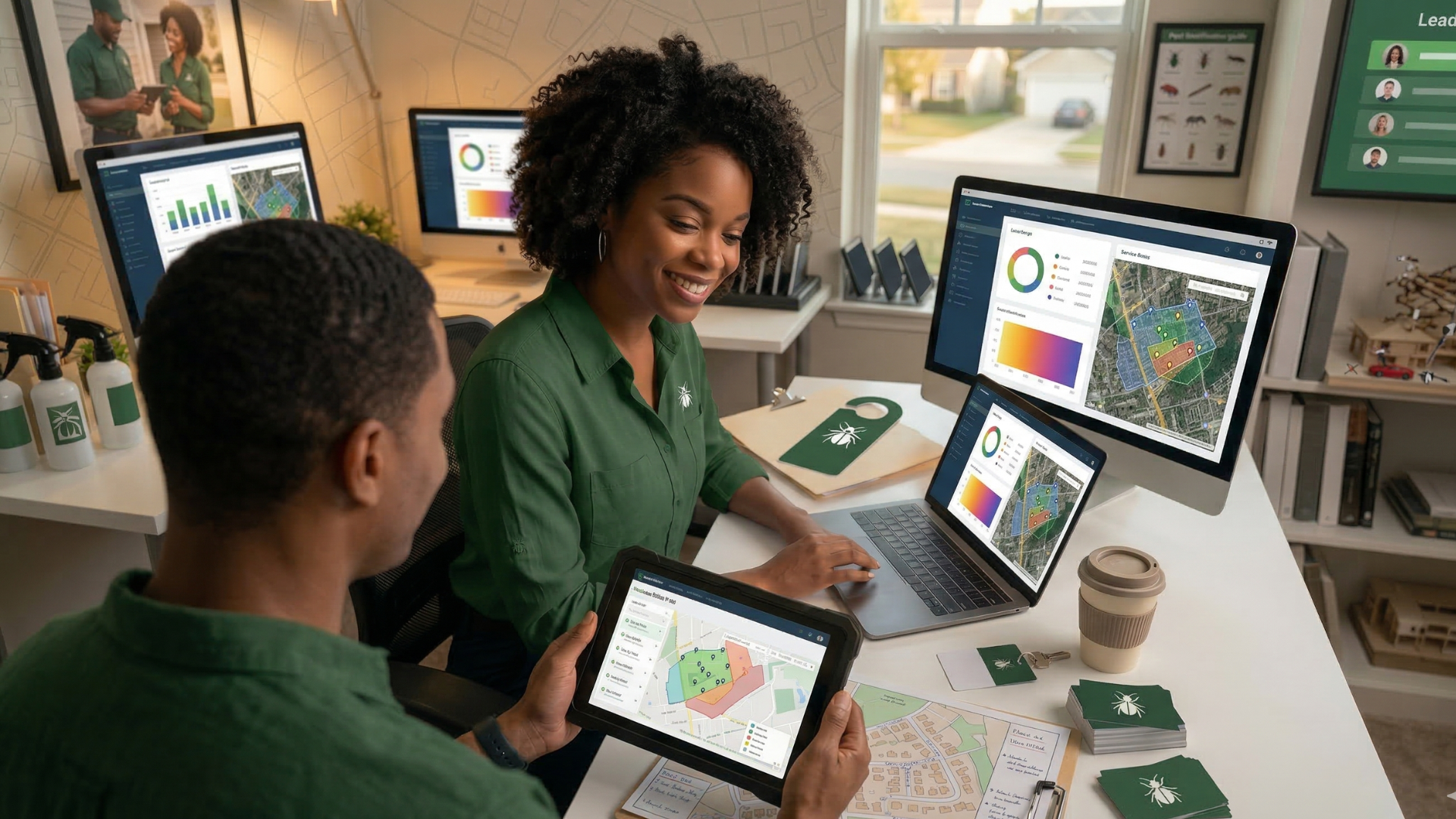
Walk through a quiet US neighborhood on a weekday afternoon, and you can still spot it right away. A knock at the door, a short pause, the front door opens just enough for someone to size you up. However, door-to-door selling has not disappeared; it has just evolved.
In 2026, the modern door-to-door salesperson looks nothing like the old stereotype. The long, rehearsed sales pitch and high-pressure sales tactics no longer work.
Today’s best reps are calm, observant, and focused on real conversations instead of forcing a sign on the spot.
If you sell solar panels, roofing, security systems, or other home services, understanding this shift matters to you. Door-to-door sales still bring in new customers, but only for salespeople who understand how today’s buyers think, decide, and say yes.
The Skills Every Modern Door-to-Door Salesperson Needs in 2026
Door-to-door sales are not dead; they have simply grown. Today’s homeowners are more informed, more skeptical, and far less patient than they were even a few years ago.
That means the old playbook of scripted pitches and pushy tactics no longer works. In 2026, successful door-to-door salespeople look very different.
They listen more than they talk, use technology to stay organized, and focus on building trust in the first few seconds of a conversation.
This shift has raised the bar. The role now demands sharper communication, better time management, and a stronger understanding of buyer psychology.
In this guide, we break down the skills that actually move the needle today.
Key Takeaways
- Door-to-door sales still work in 2026, but only when they are relationship-driven and data-informed.
- Script-only selling and aggressive tactics now hurt trust and conversion.
- Modern door selling blends field skills, technology, and follow-up discipline.
- The best reps focus on conversations, not pressure.
- Sales managers now expect transparency, professionalism, and coachability from door salespeople.
Are you prepared to enhance your door-to-door sales team for 2026?
Discover how smarter tools, better follow-up, and modern workflows can help your reps sell with confidence, protect momentum, and turn more conversations into long-term customers with Knockbase.
So book your demo and get yourself back in action.
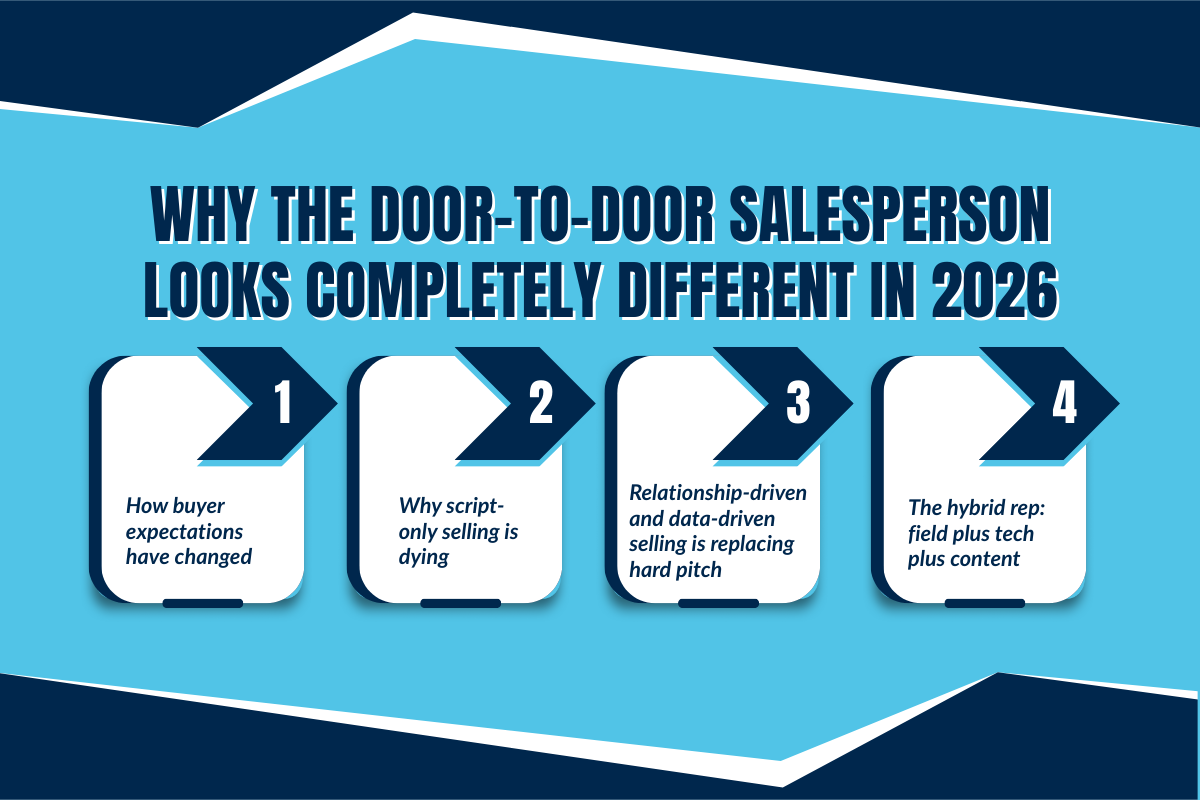
Why the Door-to-Door Salesperson Looks Completely Different in 2026?
Not long ago, door-to-door selling rewarded whoever could talk the longest and push the hardest. Today, that approach creates a bad experience and kills deals before they start.
1. Buyer expectations have changed
Homeowners are informed. Before you knock, many potential buyers have already researched solar panels, home improvement options, or security systems online. They have read reviews, compared prices, and spoken with friends.
When a salesperson shows up pretending the homeowner knows nothing, trust drops instantly. The modern door-to-door salesperson understands that the first contact is not about education. It is about relevance.
2. Script-only selling is dying
Scripts still exist, but only as training wheels. Rigid scripts fail because no two doors are the same. One person is rushing to pick up the kids, another just finished a night shift, and another has already had a bad experience with door salespeople.
Top performers adjust their speech according to the person in front of them. They listen more than they pitch. They use open-ended questions to gather information before presenting a product or service.
3. Relationship-driven and data-driven selling is replacing hard pitch
High-pressure sales tactics worked when information was scarce. In 2026, they feel outdated and risky. Modern door-to-door sales focus on building relationships quickly, showing how a product solves real pain points, and letting decision makers choose the next step.
4. The hybrid rep: field plus tech plus content
The modern salesperson is not just standing at the door. They are using technology to research neighborhoods, track leads, manage follow-up, and protect the company’s reputation.
Short positioning takeaway: Door knocking didn’t die. Old-school door knocking did.
What Does a “Modern” Door-to-Door Salesperson Actually Do?
Picture a strong door sales rep starting their day. There are no flyers and no guessing. They check their map, review what worked last week, factor in the weather, and plan their route with purpose. They know which streets converted and which did not, and they adjust rather than repeat mistakes.
Before knocking, they already understand the area. Is it a home improvement neighborhood, mostly homeowners or renters, newer builds or older roofs?
That context shapes how they start each conversation.
At the door, there is no pressure. They ask thoughtful questions, read body language, and step back politely when someone is rushed or uninterested.
After each interaction, they log notes while details are fresh and plan follow-up if needed. Most importantly, they think long term, building a pipeline instead of forcing a deal.
Conversation Framing, Not Long Pitches
A long sales pitch at the front door feels intrusive. Modern door selling starts with relevance. Successful reps lead with why they are there and why it matters to that person. They use open-ended questions like:
- What made you consider solar panels in the past?
- How do you feel about your current energy bill?
- What concerns do you have about home improvement projects right now?
These questions uncover pain points quickly. Once those are clear, positioning value becomes easier. Instead of listing features, the salesperson connects the product to the homeowner’s real problem. This approach builds relationships instead of resistance.
Micro-Closing and Appointment Setting
Micro-closing means selling the next step, not the entire deal. That next step could be: a scheduled inspection, a proposal review, a call with inside sales, or a follow-up visit with pricing.
This creates a smoother experience. The homeowner won’t feel trapped; instead, they’ll feel supported and guided every step of the way. The best reps understand that momentum matters more than pressure.
Emotional Intelligence and Reading the Door
Emotional intelligence is what separates reactive sales reps from disciplined professionals. Body language often communicates the real answer before words are spoken.
Crossed arms, minimal eye contact, or someone physically stepping back usually signal discomfort or resistance. Pushing past those cues rarely builds trust and often damages the interaction.
Knowing when to exit gracefully protects your time, your energy, and your brand reputation. It also keeps the door open for a more receptive follow-up in the future.
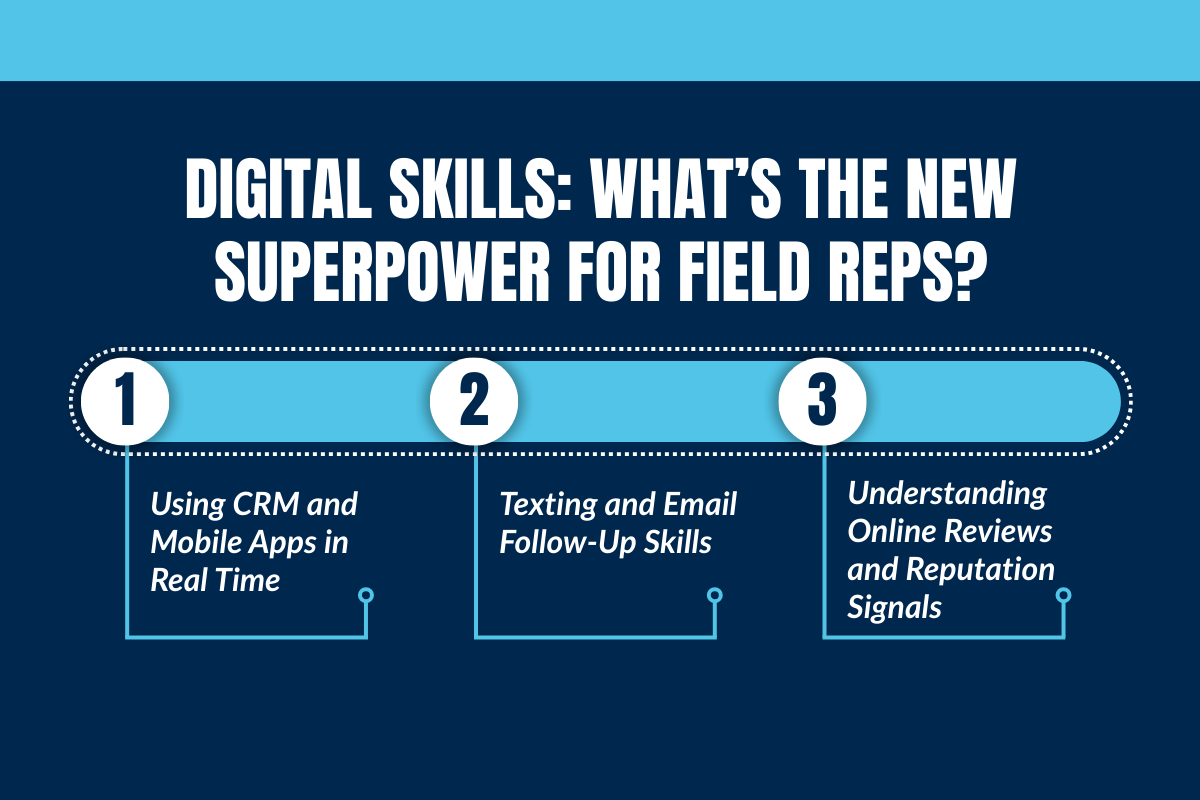
Digital Skills: What’s The New Superpower for Field Reps?
In 2026, strong door-to-door sales skills are no longer just about what you say at the door. They are about how well you use technology to stay organized, follow up consistently, and protect every opportunity after the conversation ends.
1. Using CRM and Mobile Apps in Real Time
Modern door salespeople do not trust their memory. As soon as a conversation ends, they log notes while the details are still clear. Waiting until the end of the day always means forgetting small but important things, and those gaps lead to missed follow-ups and weaker conversations later.
Using a CRM in real time keeps everything organized. Leads are tracked properly, reminders are set, and no opportunity quietly slips through the cracks. For sales managers, this visibility matters.
They want to see real activity, not guesses or end-of-week summaries. In 2026, clean data and transparency are part of the job, not an extra step.
2. Texting and Email Follow-Up Skills
Follow-up is often the quiet moment where deals are either saved or forgotten. Short, clear messages usually work better than long explanations that never get read.
Skip anything that sounds spammy or scripted. Templates are fine as a starting point, but a small personal touch makes the message feel real.
Even a simple check-in within three business days can keep the conversation alive, rather than letting it fade away.
3. Understanding Online Reviews and Reputation Signals
Most homeowners trust online reviews far more than any sales pitch. For them, the door-to-door salesperson is the face of the company standing right at the front door.
Every interaction matters. Simple things like professionalism, honesty, and respect shape how people talk about the brand later. Reps who understand this are not just trying to make a sale; they are building trust that lasts well beyond that one conversation.
The Psychology of Rejection: How 2026 Reps Protect Their Energy
Rejection is part of door-to-door sales. High performers don’t pretend rejection doesn’t sting. They just don’t let it define them. They judge themselves on effort, preparation, and consistency, not on whether a specific homeowner signed that afternoon. That mental separation protects their confidence over the long term.
Quick insight worth remembering: High performers don’t avoid rejection. They recover faster from it.
Here’s how they do it in practice:
- They separate identity from outcome: A rejected offer is not a rejected person. They measure themselves by effort and execution, not by a single homeowner’s response.
- They reset between doors: Whether it’s music, a deep breath, or a short mental pause, they intentionally clear the last interaction before starting the next one.
- They focus on controllables: They can’t control timing or budget, but they can control tone, posture, energy, and follow-up. That focus keeps confidence stable.
- They avoid negative storytelling: A few “no’s' in a row does not turn into “I’m having a terrible day.” Each door is treated as a new opportunity.
- They use rejection as feedback, not failure: Instead of replaying the loss emotionally, they ask, “What can I adjust next time?” Then they move forward immediately.
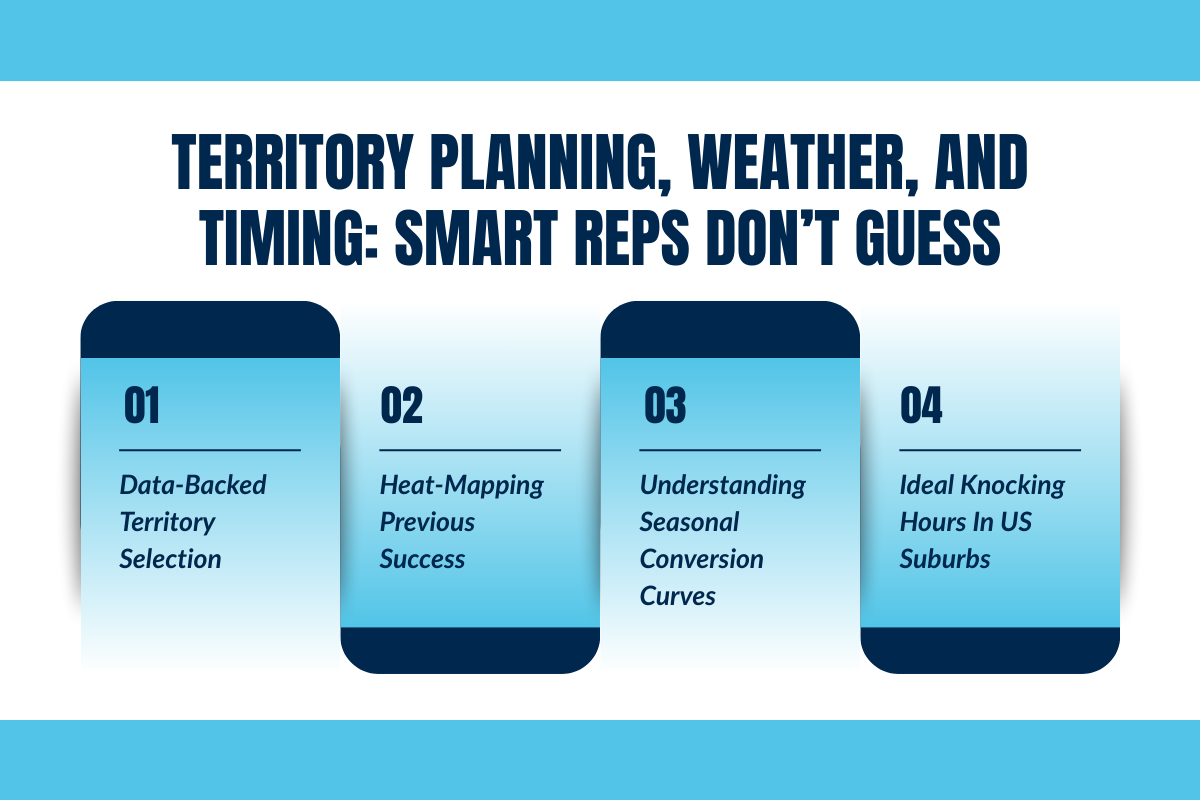
Territory Planning, Weather, and Timing: Smart Reps Don’t Guess
Strong door sales reps do not rely solely on instinct. They plan their day around patterns, past results, and real-world conditions, knowing that where and when they knock matters just as much as what they say.
1. Data-Backed Territory Selection
Successful door-to-door sales start before the first knock. Data shows which neighborhoods convert and which waste time, helping reps focus their energy on neighborhoods where real potential buyers are more likely to answer and engage.
2. Heat-Mapping Previous Success
Looking at past deals reveals patterns that are easy to miss on a daily basis. Certain streets, house types, or zip codes consistently perform better, and smart reps return to what has already proven to work.
3. Understanding Seasonal Conversion Curves
Solar panels sell differently in spring than in winter, and home improvement interest rises when projects feel practical. Reps who understand these cycles manage their time better and avoid pushing offers when the market is cold.
4. Ideal Knocking Hours In US Suburbs
Early evenings and weekends often outperform mid-day hours when homeowners are working or busy. Guessing costs money, but tracking results over time creates clarity and more productive knocking on windows.
Tools That Make a Door-to-Door Salesperson More Effective (Not Just Busier)
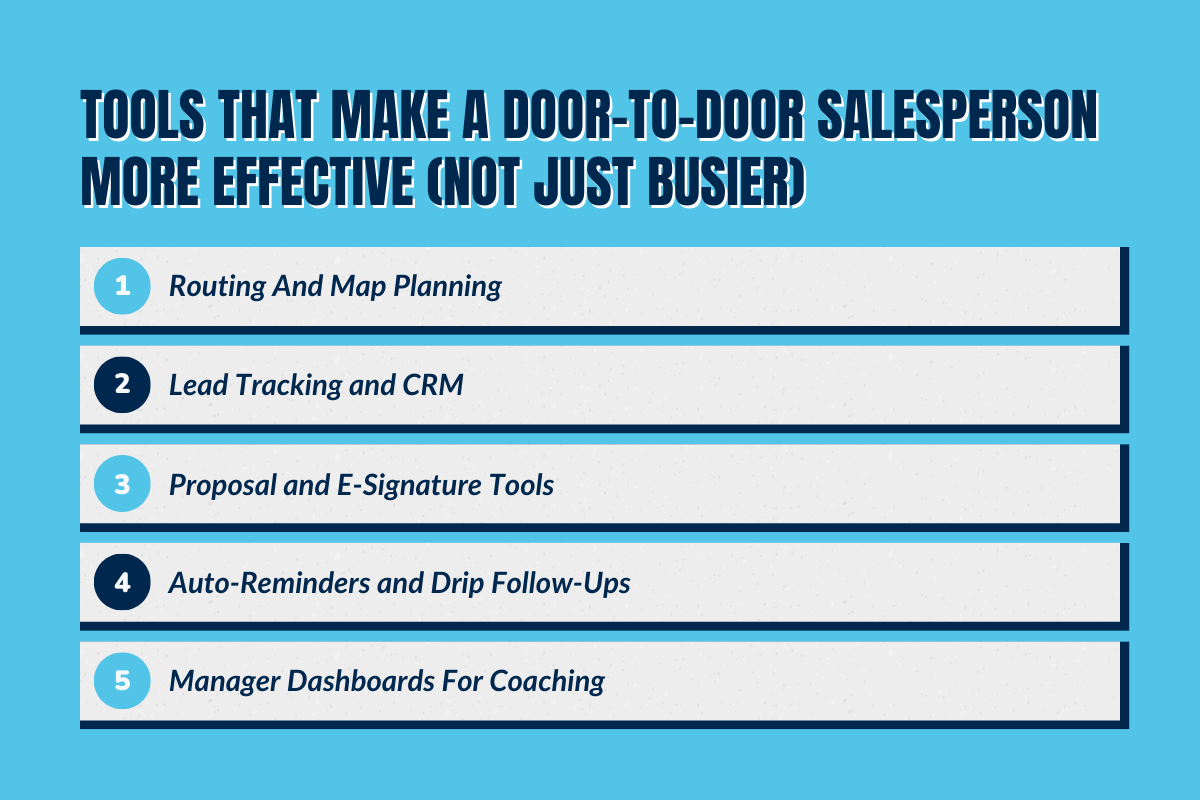
Modern door sales technology works best when it removes friction, protects follow-up, and helps reps focus on real conversations instead of admin work.
1. Routing and Map Planning
Smart routing tools help reps use their time intentionally instead of wandering between scattered streets. They reduce wasted movement and increase productive knocking hours.
- Reduces unnecessary walking or driving between doors: Optimized routes conserve physical energy and allow reps to stay sharper throughout the day.
- Prioritizes streets with higher conversion potential: Data-driven targeting increases the likelihood of quality conversations instead of random outreach.
- Helps reps cover more ground without rushing: Structured territory planning improves coverage while maintaining composure and professionalism.
2. Lead Tracking and CRM
A reliable CRM turns conversations into structured opportunities instead of forgotten interactions. It ensures that effort translates into long-term pipeline growth.
- Stores notes, objections, and next steps in one place: This keeps every homeowner interaction documented and prevents valuable context from being lost.
- Prevents leads from being forgotten after busy days: Even during high-activity periods, no warm lead slips through the cracks.
- Supports better coaching and performance tracking: Managers can identify patterns, improve messaging, and guide reps with real data instead of assumptions.
3. Proposal and E-Signature Tools
Momentum is fragile once a homeowner shows interest. The ability to act immediately often determines whether the deal progresses or stalls.
- Allows reps to share proposals while momentum is high: Instant proposal access keeps excitement alive and shortens the decision cycle.
- Eliminates delays caused by paperwork or scheduling: Digital workflows remove friction that often causes homeowners to reconsider.
- Makes it easy for homeowners to review and sign: Simple, mobile-friendly approvals reduce hesitation and accelerate contract execution.
4. Auto-Reminders and Drip Follow-Ups
Follow-up discipline separates average reps from top performers. Automated systems ensure consistency without relying on memory alone.
- Keeps follow-ups on schedule without manual effort: Reminders trigger at the right time, protecting deals that require multiple touchpoints.
- Maintains contact without sounding pushy: Structured follow-up sequences feel professional rather than aggressive.
- Reduces missed opportunities during high activity periods: When knocking volume increases, automation ensures no warm prospect is neglected.
5. Manager Dashboards For Coaching
Performance improves when managers have clarity, not just closing numbers. Visibility enables smarter leadership and targeted support.
- Shows real activity instead of just closed deals: Managers can see effort levels, follow-up consistency, and pipeline health in real time.
- Highlights where reps need guidance or support: Data reveals skill gaps early, allowing for proactive coaching instead of reactive correction.
- Encourages coaching conversations over micromanagement: Structured insights create constructive feedback loops instead of pressure-based oversight.
What are the Common Mistakes Traditional Door-to-Door Salespeople Still Make?
Many door salespeople fail for the same reasons listed below:
1. Pitch instead of asking
Instead of opening with open-ended questions to understand pain points, they jump straight into a sales pitch, which makes the homeowner feel talked at rather than listened to.
2. Skip follow-up
A surprising number of potential buyers are interested but busy, and when there is no follow-up within a few business days, that initial interest quietly disappears.
3. Take no notes after conversations
Relying on memory instead of logging details leads to forgotten objections, missed context, and awkward second conversations that break trust.
4. Ignore body language
Failing to notice crossed arms, rushed answers, or someone edging away from the front door often turns a neutral interaction into a bad experience.
5. Chase everyone, not ideal buyers
By knocking on every door without a clear target audience, they waste time on people who will never purchase, instead of focusing on homes and decision-makers with real intent.
For example, pushing a sales pitch when the homeowner is clearly distracted often creates a bad experience. Failing to log a conversation results in missed follow-ups and lost deals.
What Sales Managers Should Look for When Hiring Door-to-Door Reps in 2026?
Hiring strong door-to-door reps today is less about who has knocked the most doors and more about how they think, learn, and adapt. The right mindset often outperforms raw experience in a market where buyers are more informed and selective.
- Skills over scripts: Look for reps who can hold a natural conversation, ask smart questions, and adjust their approach rather than rely on memorized lines.
- Coachability instead of ego: The best reps are open to feedback and willing to improve, while big egos tend to resist coaching and repeat the same mistakes.
- Clear communication over aggressiveness: Calm, confident communication builds trust faster than pushy behavior, especially at the front door.
- Comfort with technology: Modern door sales require using CRM tools, mobile apps, and follow-up systems without resistance or excuses.
- Ethical selling habits: Reps who sell with honesty protect the brand, reduce cancellations, and build long-term customer trust.
Commission-only roles still exist, but top performers increasingly look for structure, support, and a clear path to sustainable success.
How Knockbase Supports the Modern Door-to-Door Salesperson?
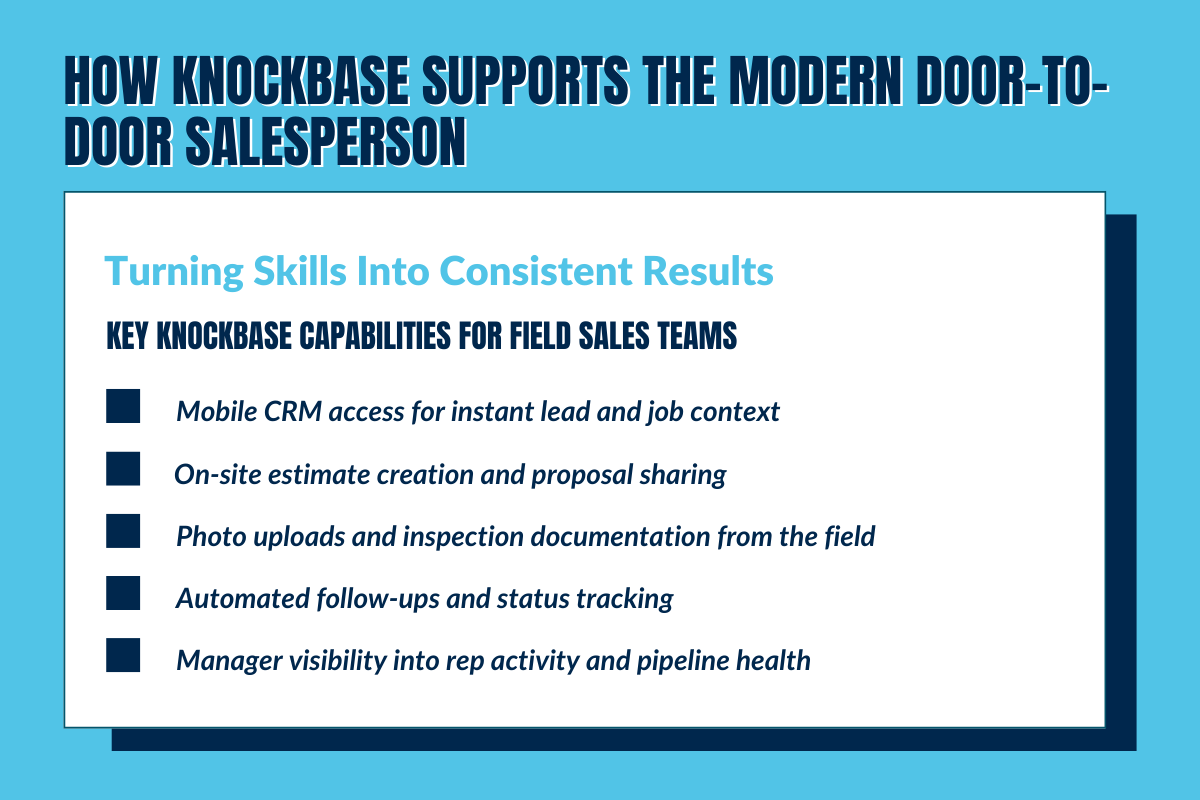
Great sales skills only go so far without the right system behind them. Knockbase helps modern door-to-door reps stay organized, protect follow-up, and keep momentum strong, so they can focus on conversations instead of juggling tools and tasks.
Key Knockbase Capabilities for Field Sales Teams
- Mobile-First Field CRM: Knockbase provides full CRM access directly from a mobile device, allowing reps to view homeowner details, notes, past visits, and status updates before knocking. This ensures every conversation starts informed rather than improvised.
- Territory & Route Management: The platform allows reps to visualize assigned territories, track doors knocked, and avoid overlap between team members. Structured territory control increases efficiency and prevents wasted effort.
- Door Activity Tracking & Status Tagging: Reps can log outcomes instantly, such as not home, interested, follow-up needed, or not qualified, directly from the field. This creates a clean, trackable pipeline instead of scattered notes.
- On-Site Estimate & Proposal Creation: Estimates can be created and shared immediately while the homeowner's interest is high. This eliminates the delay between conversation and follow-up that often kills momentum.
- Digital Agreements & E-Signatures: Contracts can be reviewed and signed digitally without paperwork delays. Faster approvals protect buying energy and shorten the time from pitch to commitment.
- Photo Capture & Field Documentation: Reps can upload property photos and inspection notes directly inside the platform. This prevents missing details and supports smoother handoff to operations.
- Automated Follow-Ups & Task Reminders: Built-in reminders ensure no lead is forgotten after a long knocking day. Follow-up consistency becomes system-driven rather than memory-dependent.
- Performance Dashboards for Managers: Managers gain real-time visibility into doors knocked, conversations logged, follow-ups scheduled, and pipeline health. This supports coaching based on data instead of guesswork.
When systems support selling, reps focus on conversations instead of chaos.
Final Thoughts: The Door-to-Door Salesperson Isn’t Going Away, It’s Evolving
Door-to-door sales remain one of the highest leverage channels in home services. But the skillset must match 2026 buyers. The reps who adapt will dominate their market. They will build relationships, protect their energy, and create consistent success.
Those who don’t will burn out chasing a version of selling that no longer exists. The knock still matters. What happens after the door opens matters more.
Turn Modern Selling Skills Into Consistent Results With Knockbase
Modern door-to-door selling takes more than confidence and conversation skills. Knockbase helps you turn every strong interaction into a tracked lead, a timely follow-up, and a real opportunity.
From mobile CRM to on-site estimates and automated reminders, Knockbase gives your team the structure they need to sell with clarity, consistency, and control.
Book a demo today, and see how Knockbase helps your reps close more without creating chaos.
FAQs:
1. How many doors should a door-to-door rep knock per day in 2026?
The ideal number depends on territory density and product type, but modern reps focus more on quality conversations than raw door counts. Tracking conversations, appointments set, and follow-ups is more important than chasing volume alone.
2. What skills matter most for a modern door-to-door salesperson?
The most important skills include strong communication, emotional intelligence, adaptability, follow-up discipline, and comfort with sales technology like CRM and mobile apps. Modern reps win by listening, not just talking.
3. How can door-to-door reps avoid burnout during long knocking days?
Burnout prevention comes from structured territory planning, realistic daily targets, proper hydration, mental resets between doors, and consistent follow-up systems that prevent wasted effort.
4. What KPIs should sales managers track for door-to-door teams?
Beyond closed deals, managers should track doors knocked, conversations started, appointments set, follow-up consistency, and conversion by territory. Activity transparency reveals coaching opportunities early.
5. How does Knockbase help door-to-door sales teams perform better?
Knockbase helps reps track leads, create on-site estimates, manage follow-ups, and gives managers full visibility into sales activity. It turns strong sales skills into consistent results by eliminating manual work and follow-up gaps.
6. How important is same-day follow-up after a door conversation?
Very important. Interest cools quickly, especially when homeowners are comparing options. A short, personalized follow-up within 24–72 hours significantly increases conversion probability.